
Custom Logos & Graphics on Awnings: Sublimation vs Vinyl Options
By Products
25th Aug 2026
Products
Custom Logos & Graphics on Awnings: Sublimation vs Vinyl Options
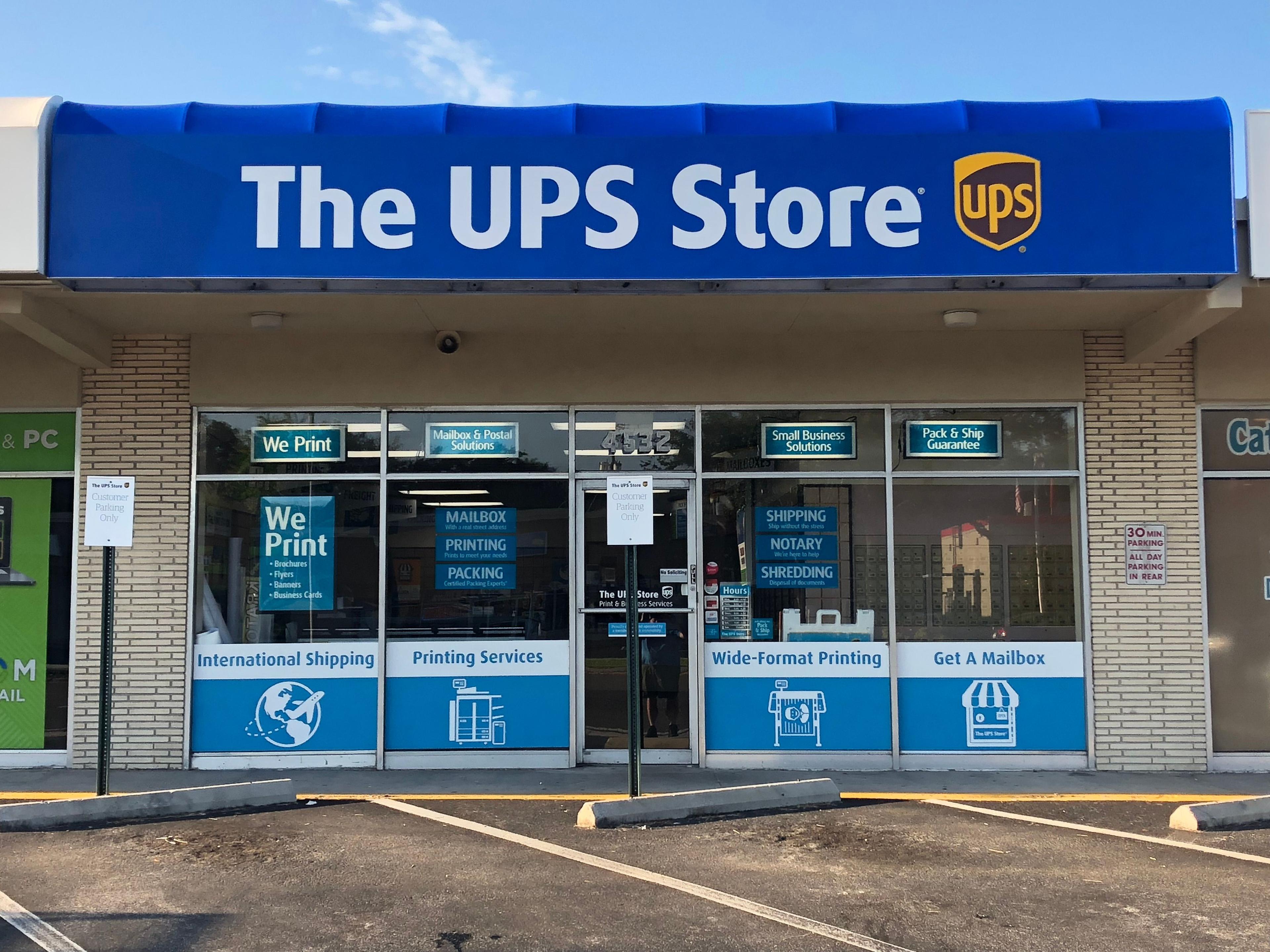
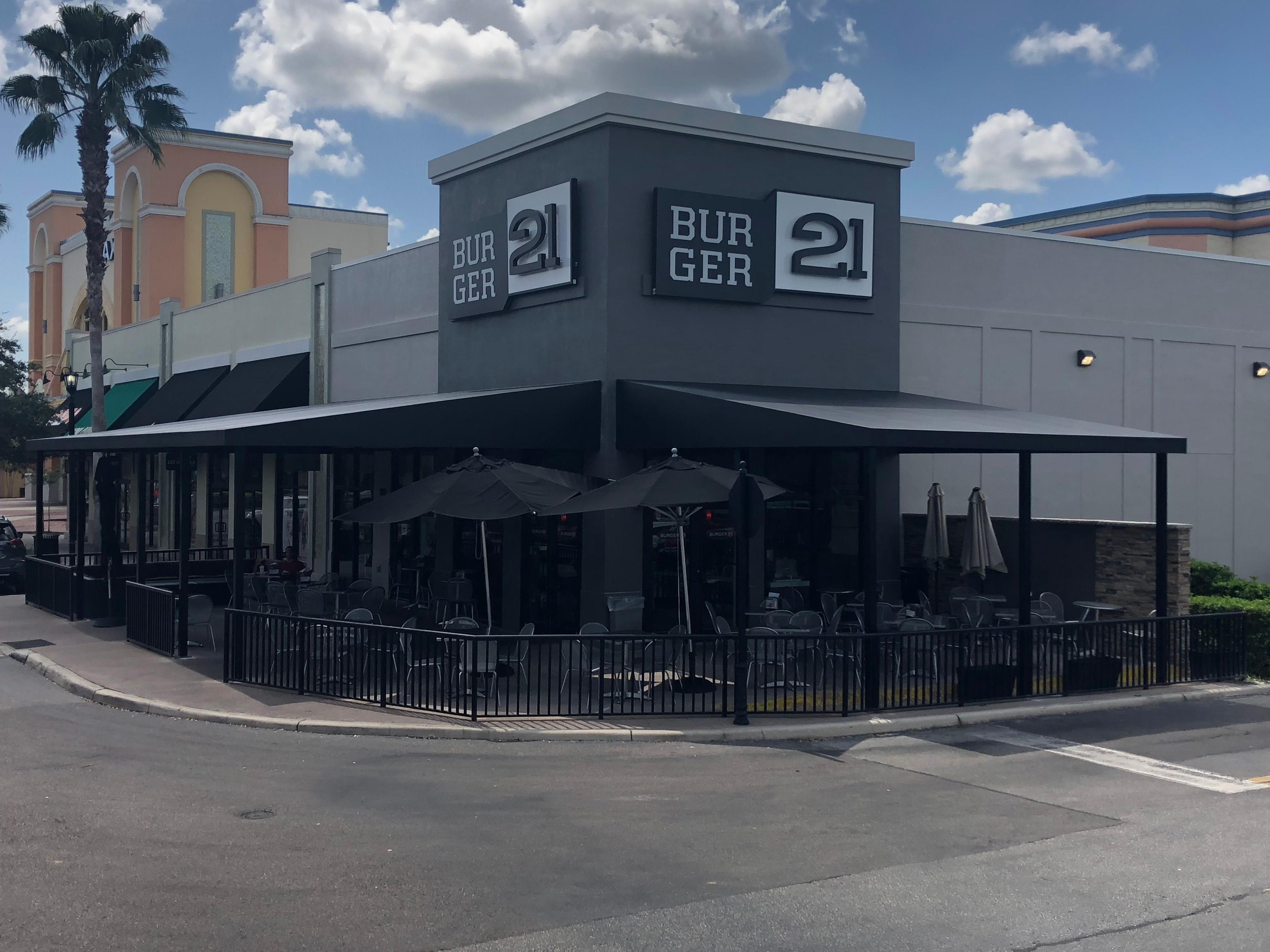
An awning already earns its keep by cutting glare and keeping customers dry. Put your name on it and it does a second job: it becomes signage that works from down the block, at an angle no wall-mounted sign can match. For multi-tenant plazas and businesses set back from the road, a branded awning is often the most visible identifier on the building.
The question is how the graphics get applied. There are two mainstream answers, and they behave very differently over time.
Vinyl Graphics: Applied to the Surface
Vinyl lettering and logos are cut or printed on adhesive film and applied to the finished awning surface. It's the familiar approach, and it has real advantages.
- Fast turnaround, often days rather than weeks.
- Lower upfront cost, especially for simple lettering.
- Changeable. When a tenant changes or a phone number does, you peel and replace rather than rebuild.
- Works on existing awnings, so you can brand something already installed.
The tradeoff is that vinyl is a layer sitting on top of the substrate. Florida sun and heat go after adhesives. Expect edge lift, some fading, and eventual cracking, with a realistic service life of roughly three to seven years depending on color, exposure, and how well the surface was prepped. Dark colors and south-facing exposures age fastest.
Sublimation: Bonded Into the Finish
Sublimation is a different animal. The design is transferred with heat so the ink turns to gas and bonds into the powder-coated finish itself. There's no layer on top. Run your hand across a sublimated panel and you feel finish, not a sticker edge.
- Dramatically longer life. Nothing can peel, because nothing was applied on top.
- Far better UV and fade resistance than surface vinyl.
- Handles complex artwork, gradients, and photographic detail that cut vinyl can't reproduce.
- No edges to catch dirt, so it stays cleaner and washes down easily.
- Uniform appearance across large panels.
The tradeoffs are honest ones: it's a manufacturing process, so it happens when the awning is built rather than after, lead times are longer, upfront cost is higher, and changing the design later means new panels. It's the right call when the branding is stable.
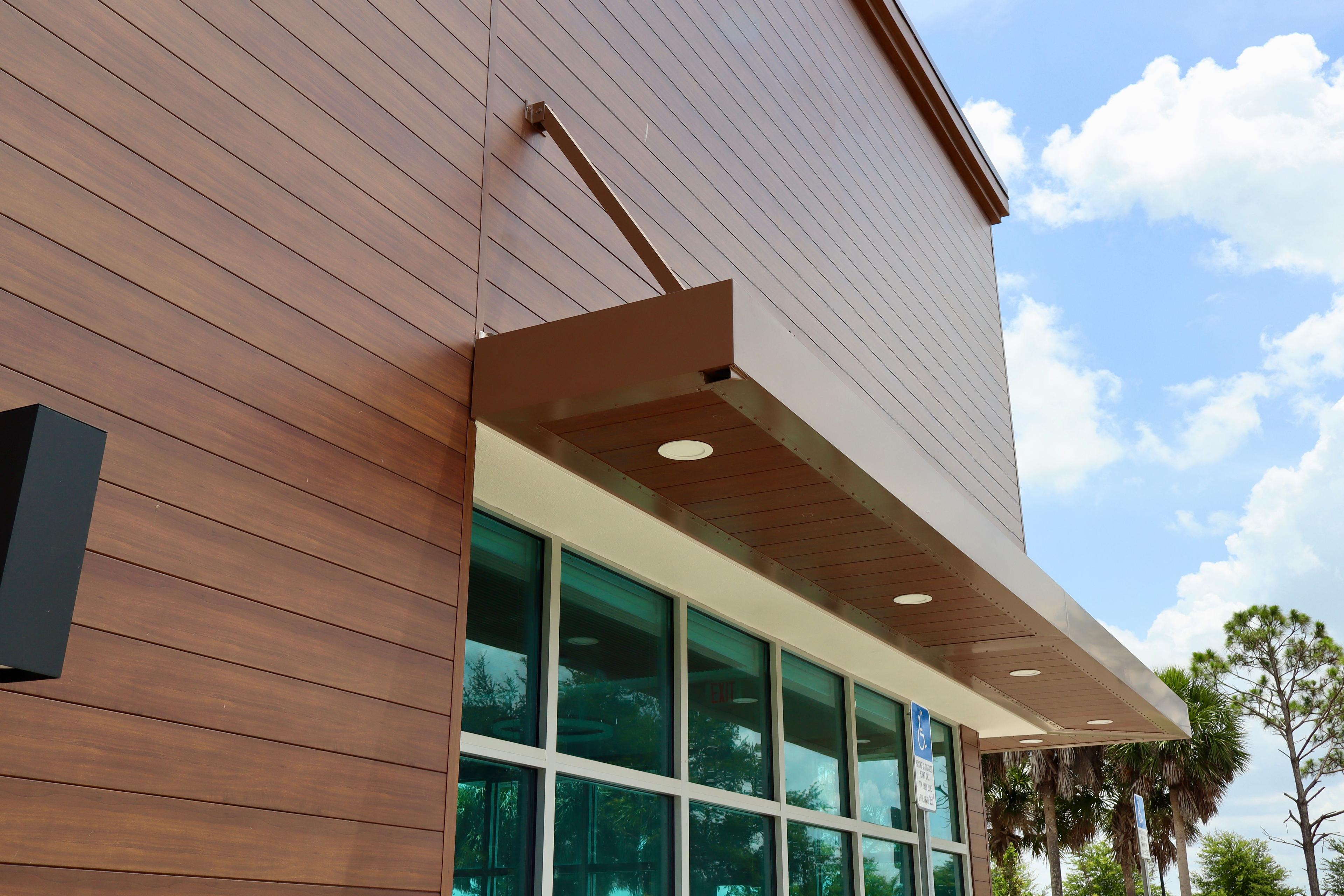
If you've seen our woodgrain aluminum, you've seen sublimation at work. The same process that puts convincing wood grain on an aluminum frame puts a logo there.
Which One Fits Your Situation
- Choose vinyl if you're a tenant rather than the owner, branding may change, budget is tight, the awning already exists, or you're testing a location.
- Choose sublimation if you own the building, the brand is established, the awning is being fabricated now, the artwork is detailed or full-color, or the structure is somewhere replacing graphics would be disruptive and expensive.
There's also a third path people forget: skip graphics entirely and let color carry the brand. A powder coat matched to your brand color reads as identity from a distance without any applied artwork, and it never degrades differently from the rest of the awning. For some brands that's the cleanest answer.
Design Notes That Improve the Result
- Send vector artwork. Scaled-up raster logos look soft at awning size, and awnings are large.
- Consider the viewing angle. An awning is seen from below and from the side, not straight on. Layouts that work on a business card compress badly at 30 degrees.
- Mind contrast. Light artwork on a dark powder coat holds legibility better than the reverse in bright sun.
- Plan for lighting if the business operates after dark. Graphics that disappear at night solve half the problem.
- Get brand colors as coating and ink references, not just screen values. Color on a monitor is not color on aluminum.
Getting It on the Right Structure
Graphics look best on surfaces designed to carry them. Broad, clean faces give artwork room to breathe, which is why C-channel architectural canopies and G-gutter awnings work well for branded installations. If your project calls for fabric instead, fabric and vinyl awnings take printed and applied graphics readily.
We handle powder coating and sublimation in-house, so color matching and artwork quality stay under our control instead of a vendor's. Send us your logo and the building, and we'll show you what it looks like on an awning. Request a free quote to start.
Metal Awnings in Lake Mary, FL | Commercial & Residential Aluminum Canopies
12th Oct 2026
Metal Awnings in Panama City Beach, FL | Commercial & Residential Aluminum Canopies
12th Oct 2026
Metal Awnings in Fernandina Beach, FL | Commercial & Residential Aluminum Canopies
12th Oct 2026
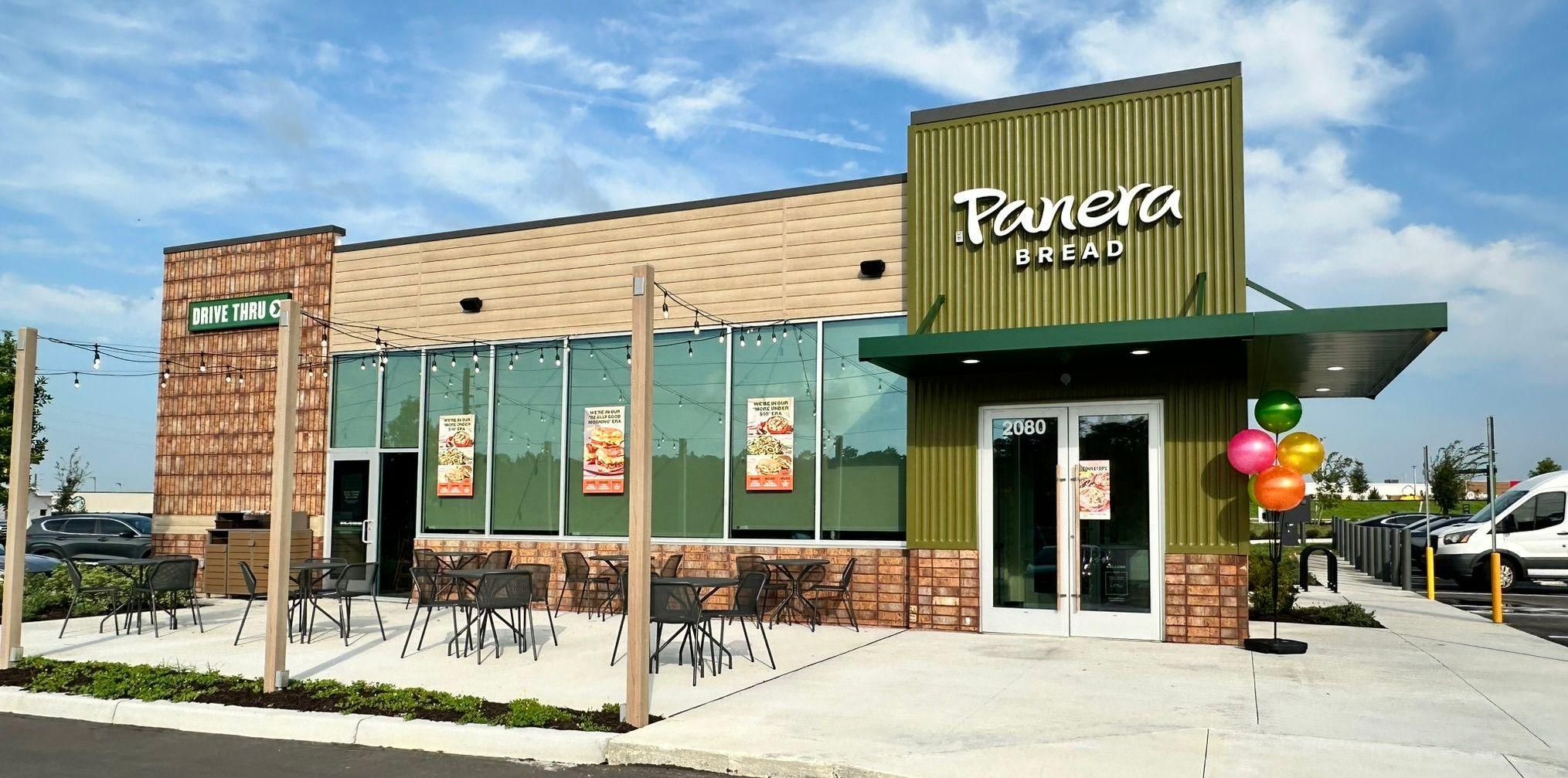
Metal Awnings in Ponte Vedra Beach, FL | Commercial & Residential Aluminum Canopies
12th Oct 2026
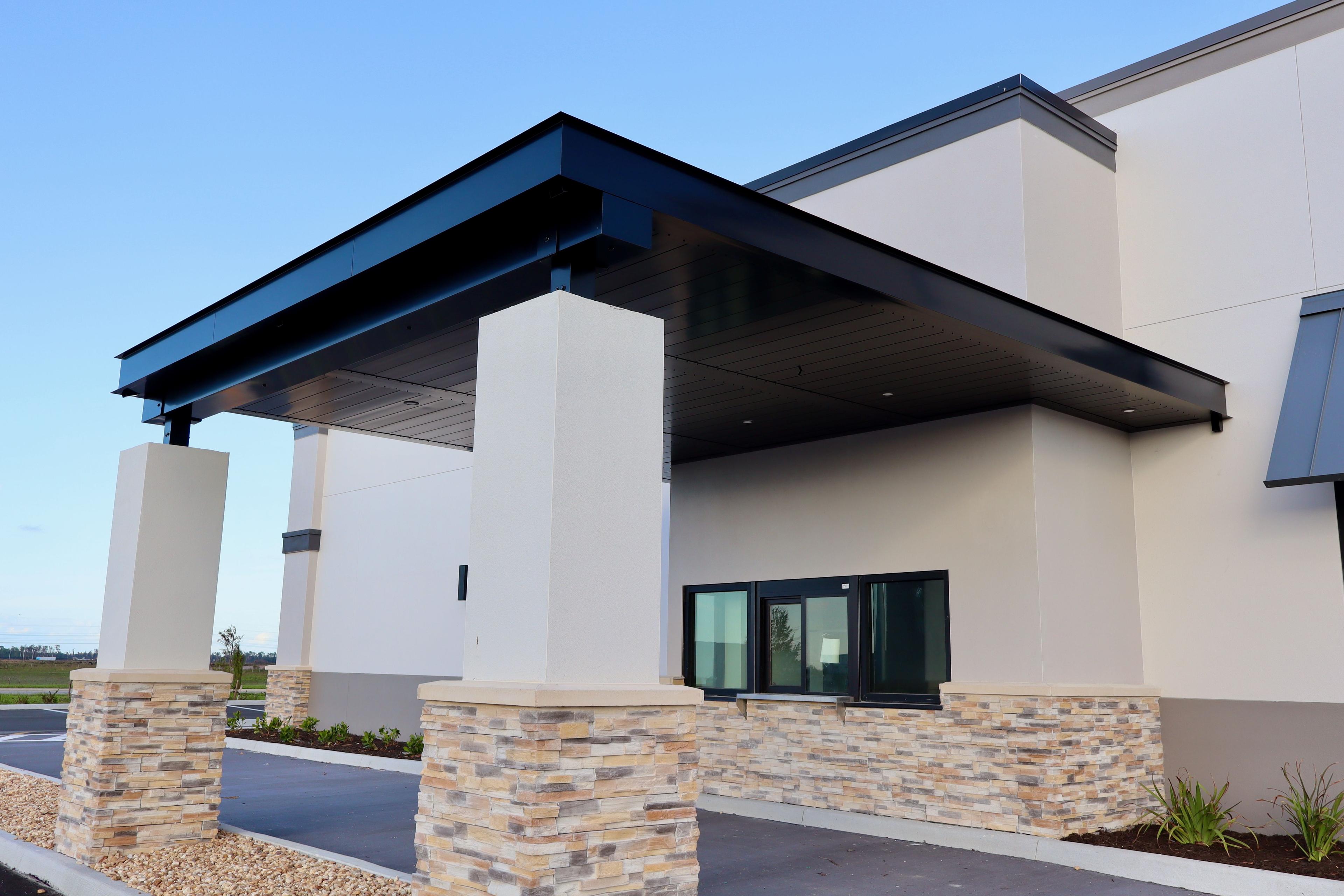
Metal Awnings in St. Augustine, FL | Commercial & Residential Aluminum Canopies
12th Oct 2026
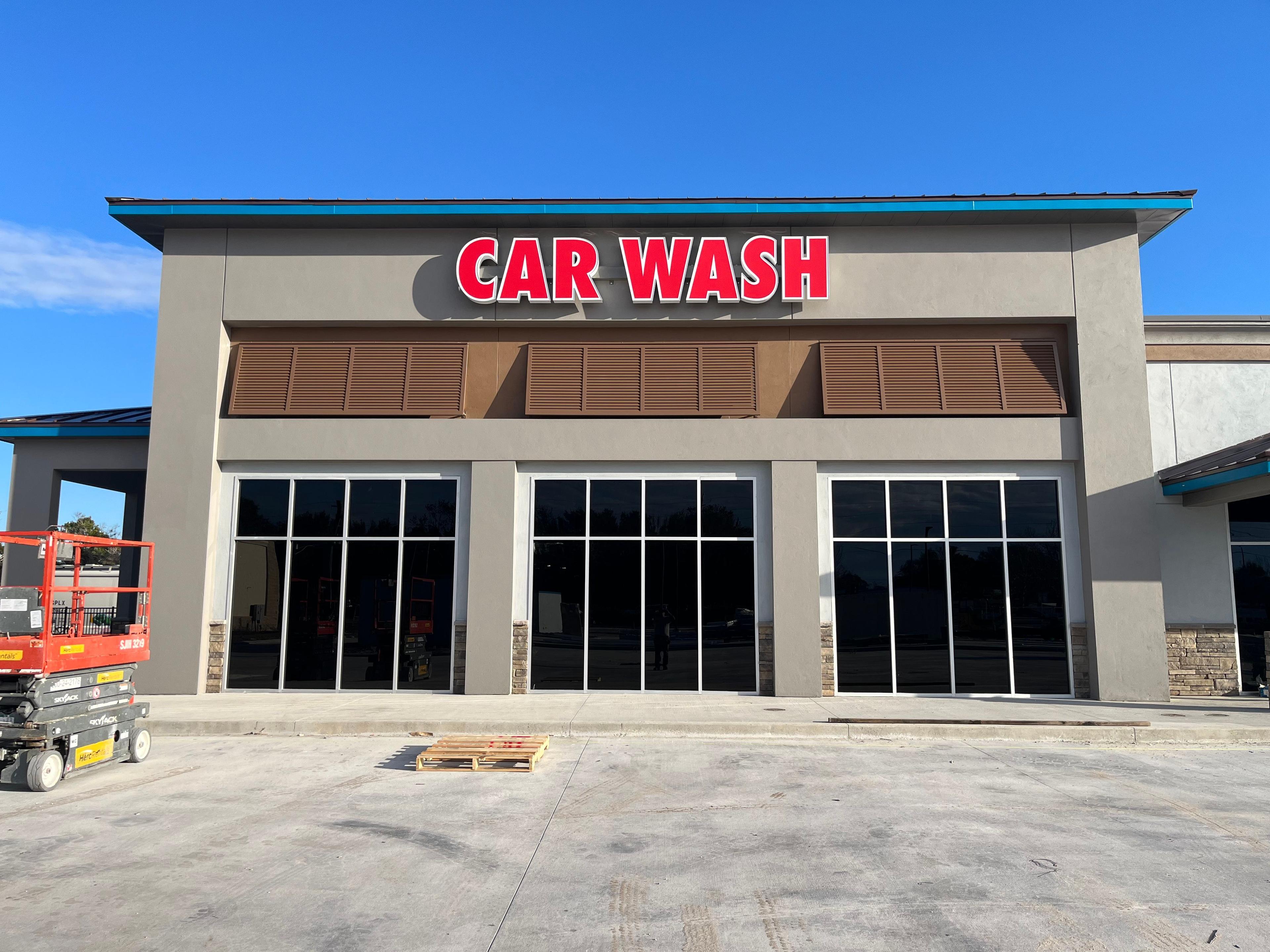
Metal Awnings in Islamorada, FL | Commercial & Residential Aluminum Canopies
12th Oct 2026
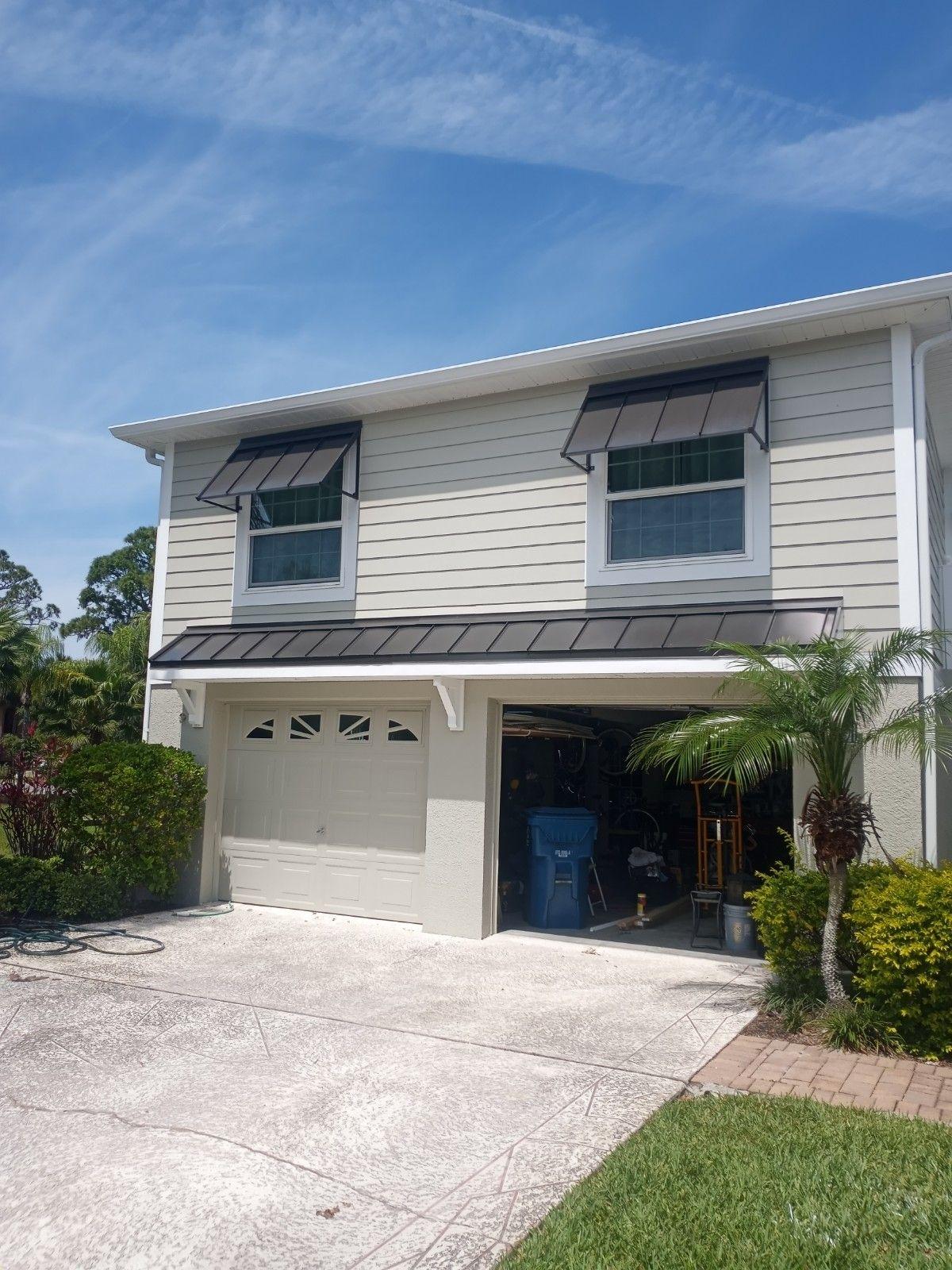
Metal Awnings in Sanibel, FL | Commercial & Residential Aluminum Canopies
12th Oct 2026
Metal Awnings in Fort Myers Beach, FL | Commercial & Residential Aluminum Canopies
12th Oct 2026
Metal Awnings for Condos, HOAs & Apartment Communities: Durable Shade That Lasts
29th Sep 2026
Metal Awnings for Medical & Dental Offices: Covered Entries Patients Notice
29th Sep 2026
Metal Awnings in Poinciana, FL | Commercial & Residential Aluminum Canopies
21st Sep 2026
Metal Awnings in Palmer Ranch, FL | Commercial & Residential Aluminum Canopies
21st Sep 2026

Address: 4608 N Hale Ave, Tampa, FL 33614
Phone: 813-249-0059
Email: sales@metalawnings.com
Hours: 07:00 am – 03:30 pm


