
Salt-Air & Corrosion Resistance: Why Coastal Buildings Need Aluminum
By Products
25th Aug 2026
Products
Salt-Air & Corrosion Resistance: Why Coastal Buildings Need Aluminum
Salt air is patient. It doesn't wreck a building in a season; it works slowly, finds every unprotected edge and fastener, and shows up three years later as rust bleed down a stucco wall. If your property sits anywhere near the Gulf, the material you choose for exterior shade structures matters more than almost any other spec on the job.
This is the single clearest case for aluminum over steel, and it's worth understanding why rather than taking it on faith.
What Salt Air Actually Does to Metal
Airborne salt is hygroscopic, meaning it pulls moisture from the air and holds it against a surface. That thin, persistent, salt-laden film is an electrolyte, and it turns ordinary oxidation into an electrochemical process that runs continuously rather than only when it rains.
On steel, that reaction produces iron oxide, which flakes. Every flake exposes fresh metal underneath, so the corrosion accelerates instead of slowing down. On aluminum, the reaction produces a thin aluminum oxide layer that adheres tightly and seals the surface, effectively stopping further attack. Same weather, opposite outcome.
How Far Inland Does This Matter?
Farther than people expect. Salt deposition is measurable well past the beach, and prevailing winds carry it inland across the Tampa Bay area. A few practical zones:
- Direct exposure, within a few hundred feet of open water. Severe. Material choice and finish quality are not negotiable here.
- Roughly one to five miles inland. Moderate but real, especially on the windward side of a building. Most of the bay area lives here.
- Farther inland. Mild salt exposure, but Florida humidity and UV are still doing damage on their own.
Worth noting: pool decks and splash zones create their own corrosive environment from chlorine, and it behaves similarly. Waterfront isn't the only place this applies.
Why Aluminum Wins on Coastal Buildings
- It cannot rust. Iron oxide requires iron. Aluminum's failure mode is cosmetic pitting, not structural flaking.
- It self-passivates. Scratch the surface and a fresh oxide layer forms within moments, so damage doesn't propagate the way it does on painted steel.
- It's light. Lower dead load means simpler attachment, fewer and smaller fasteners into the wall, and less stress on the building.
- It holds a finish well. Properly prepped and powder-coated aluminum stays looking intentional for years rather than streaking.
- It doesn't stain the building. Rust runoff from a steel canopy discolors stucco and masonry below it, and that cleanup is often more expensive than the awning.
Material Alone Isn't Enough
Aluminum resists corrosion; it doesn't make the assembly immune. The details decide how a structure ages in salt air:
- Fasteners and hardware must be stainless or compatible aluminum. A steel screw in an aluminum frame corrodes, stains, and can seize the connection.
- Dissimilar metals in contact create galvanic corrosion. Where aluminum meets steel structure, an isolation barrier belongs in the detail.
- Surface preparation before coating determines finish life more than the coating product does. Skipped prep shows up as adhesion failure.
- Drainage matters. Water that sits in a channel keeps salt in constant contact with the surface, which is exactly the condition to avoid.
Finish Quality Does the Rest
We powder-coat in-house rather than outsourcing, which means we control the prep and cure on every part we ship. A well-applied powder coat gives salt air one more barrier to get through and keeps color stable under UV that fades lesser finishes to chalk.
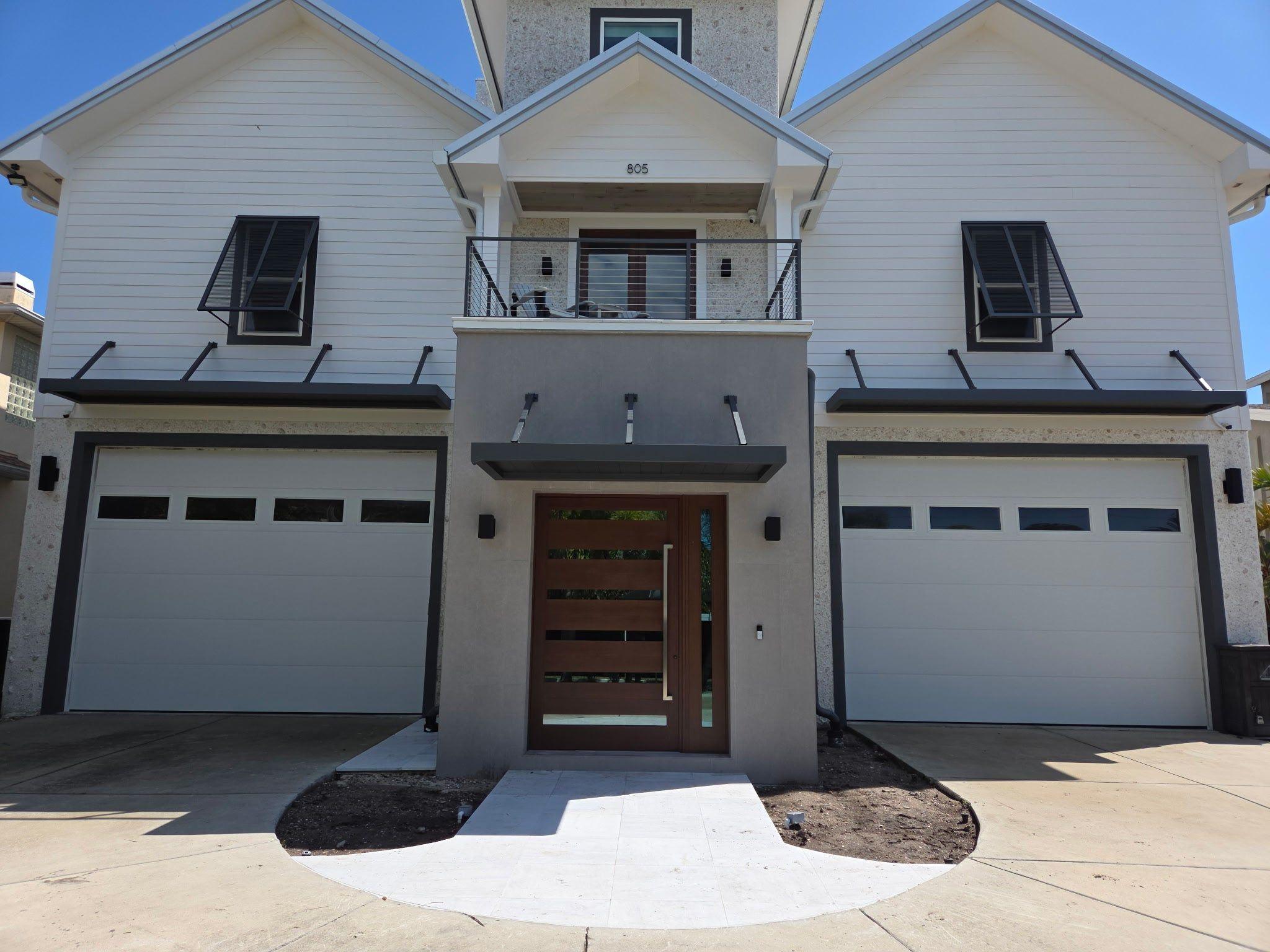
For coastal properties, Bahama-style awnings are a natural fit, shading windows at an angle that blocks high sun while preserving the view. On commercial buildings, architectural canopies and louvered sunshade structures hold up to the same exposure. If you want a warm, natural look without the rot risk that comes with real wood near salt water, our woodgrain sublimation finish puts a wood appearance on an aluminum frame.
The Short Version
Near the coast, a steel canopy is a maintenance schedule you signed up for without reading. Aluminum with a quality finish and correctly specified hardware is a structure you install and then mostly forget about. The price difference between the two narrows considerably once you count repainting, rust remediation, and stucco cleaning.
Building near the water? Tell us about the site and exposure and we'll spec a structure built for it. Request a free quote to get started.
Metal Awnings in Lake Mary, FL | Commercial & Residential Aluminum Canopies
12th Oct 2026
Metal Awnings in Panama City Beach, FL | Commercial & Residential Aluminum Canopies
12th Oct 2026
Metal Awnings in Fernandina Beach, FL | Commercial & Residential Aluminum Canopies
12th Oct 2026
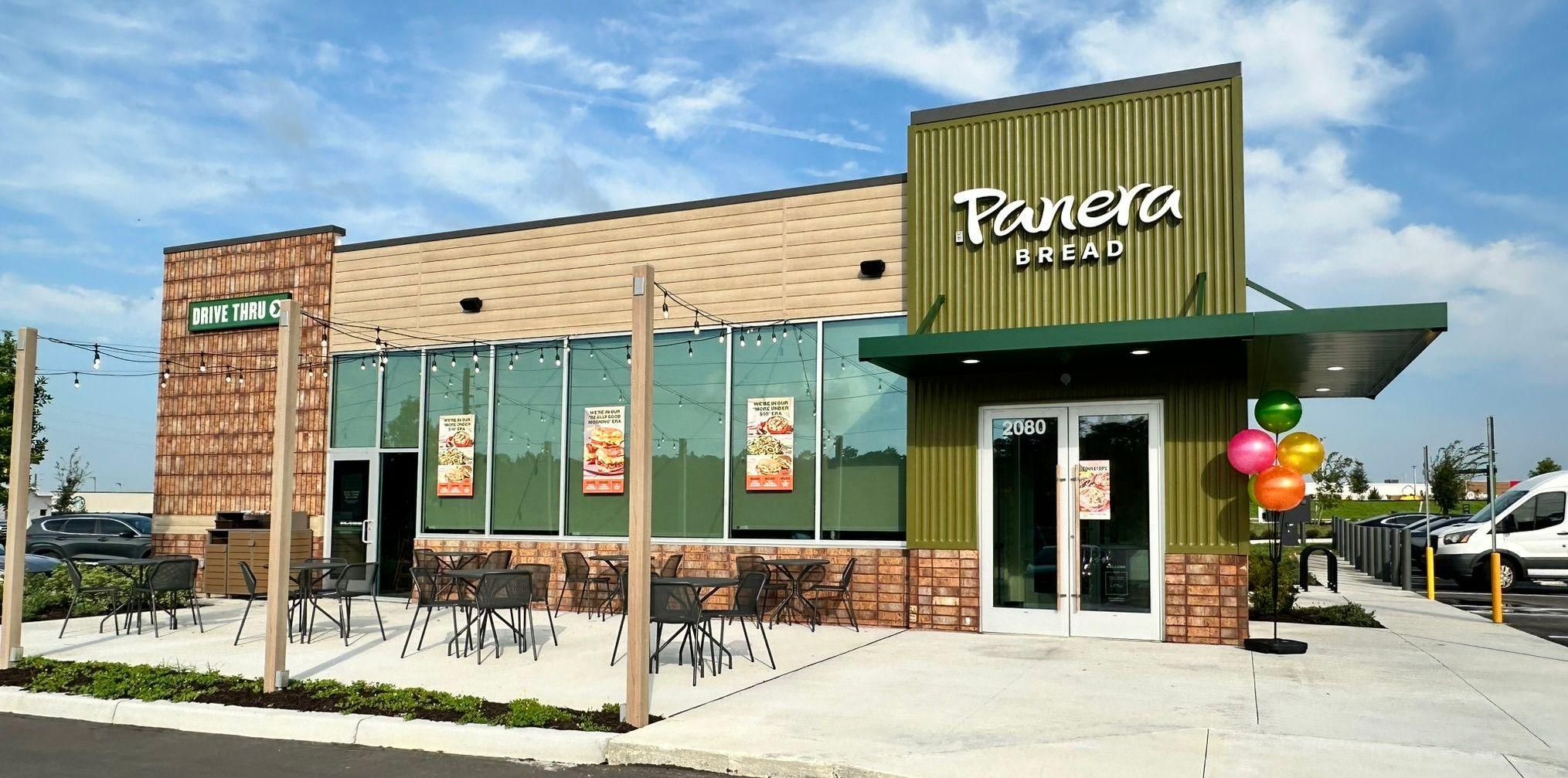
Metal Awnings in Ponte Vedra Beach, FL | Commercial & Residential Aluminum Canopies
12th Oct 2026
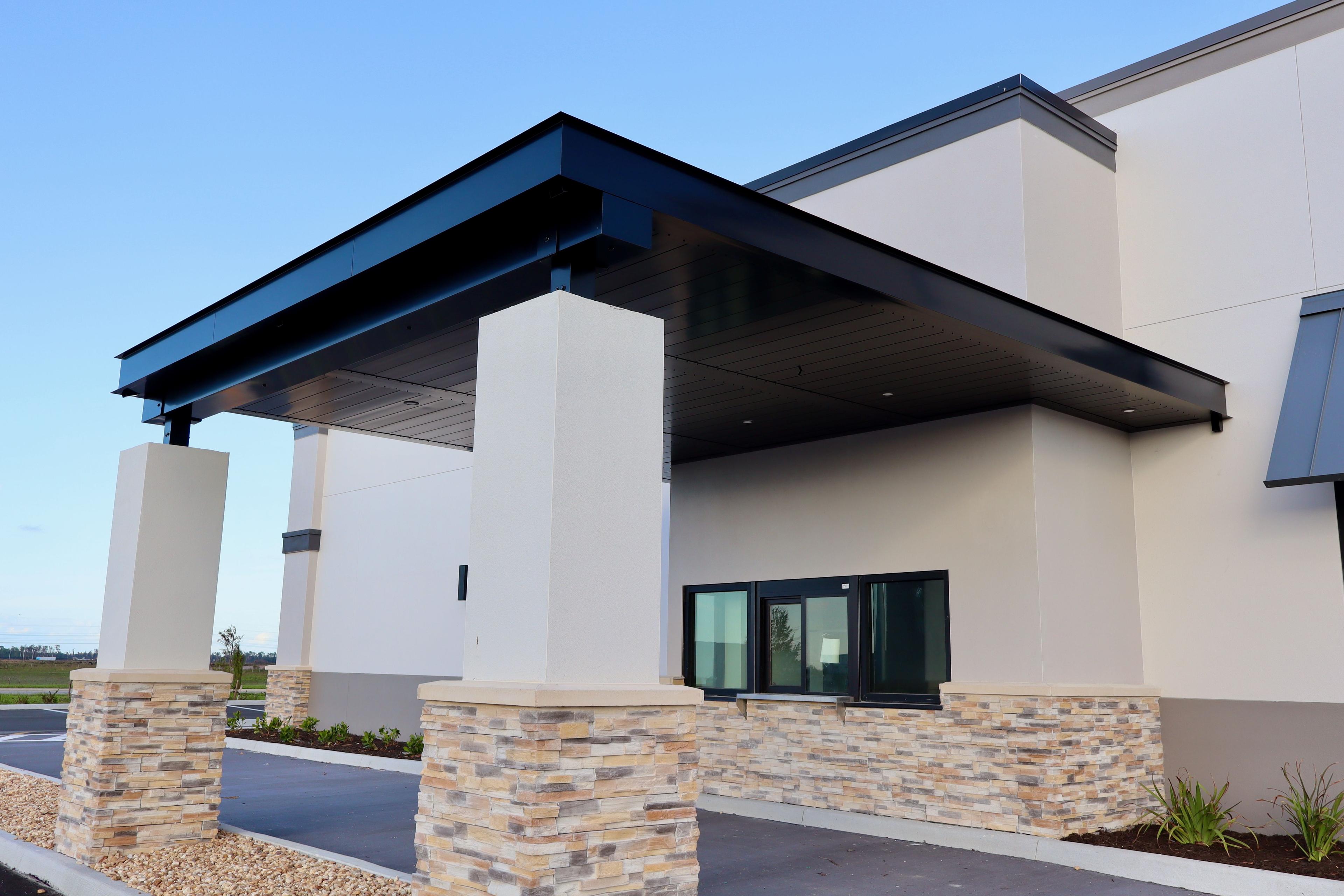
Metal Awnings in St. Augustine, FL | Commercial & Residential Aluminum Canopies
12th Oct 2026
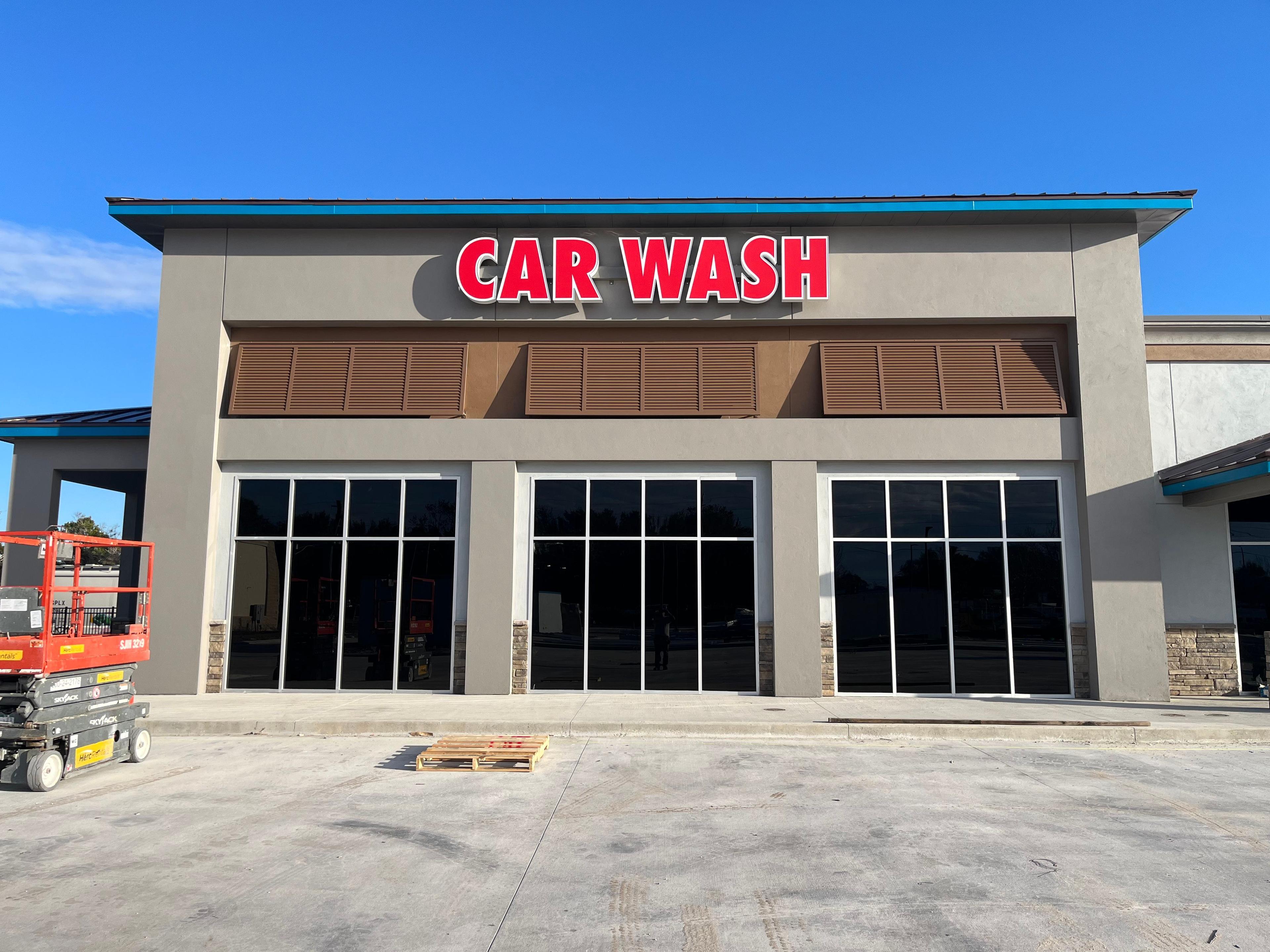
Metal Awnings in Islamorada, FL | Commercial & Residential Aluminum Canopies
12th Oct 2026
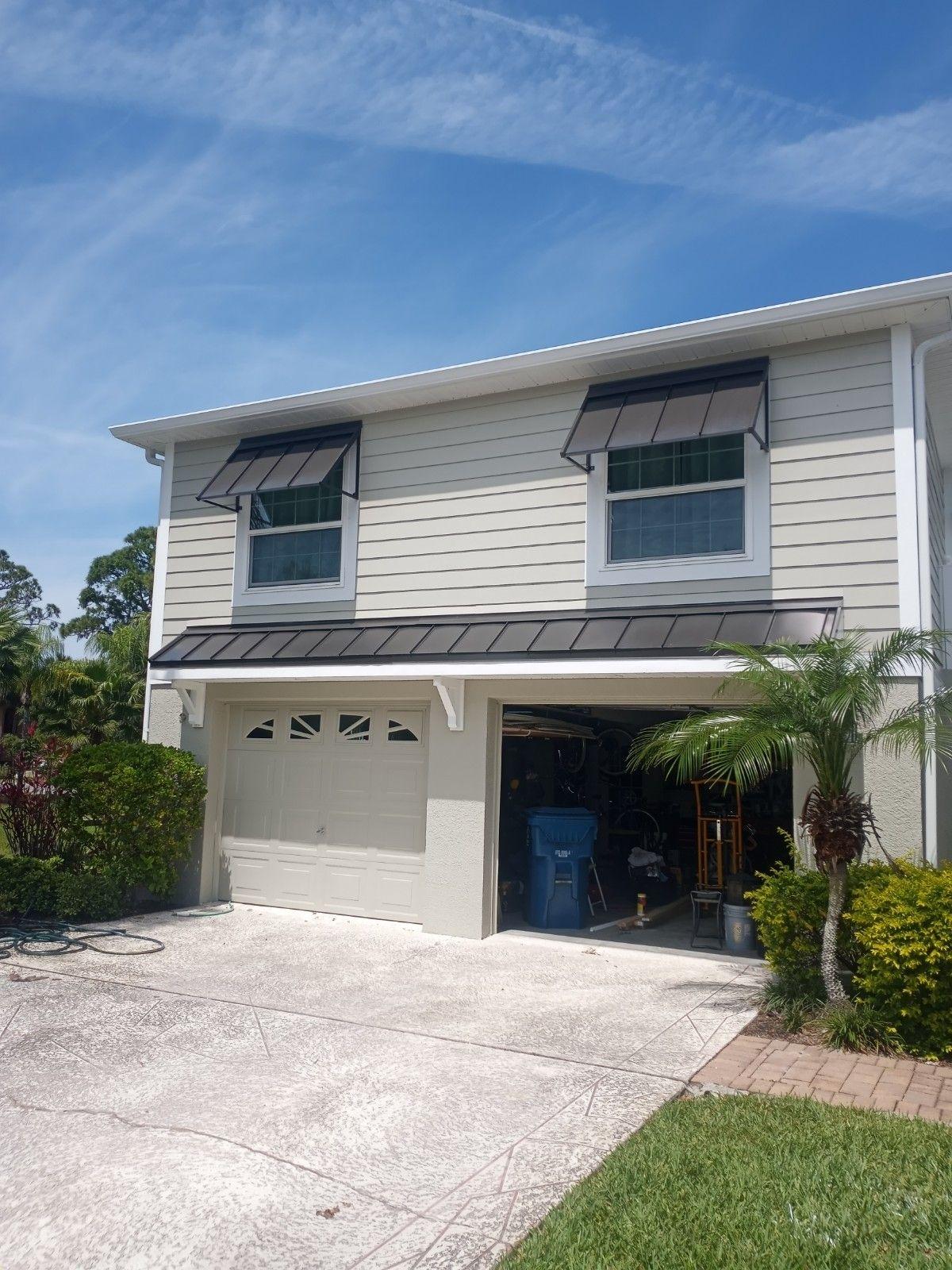
Metal Awnings in Sanibel, FL | Commercial & Residential Aluminum Canopies
12th Oct 2026
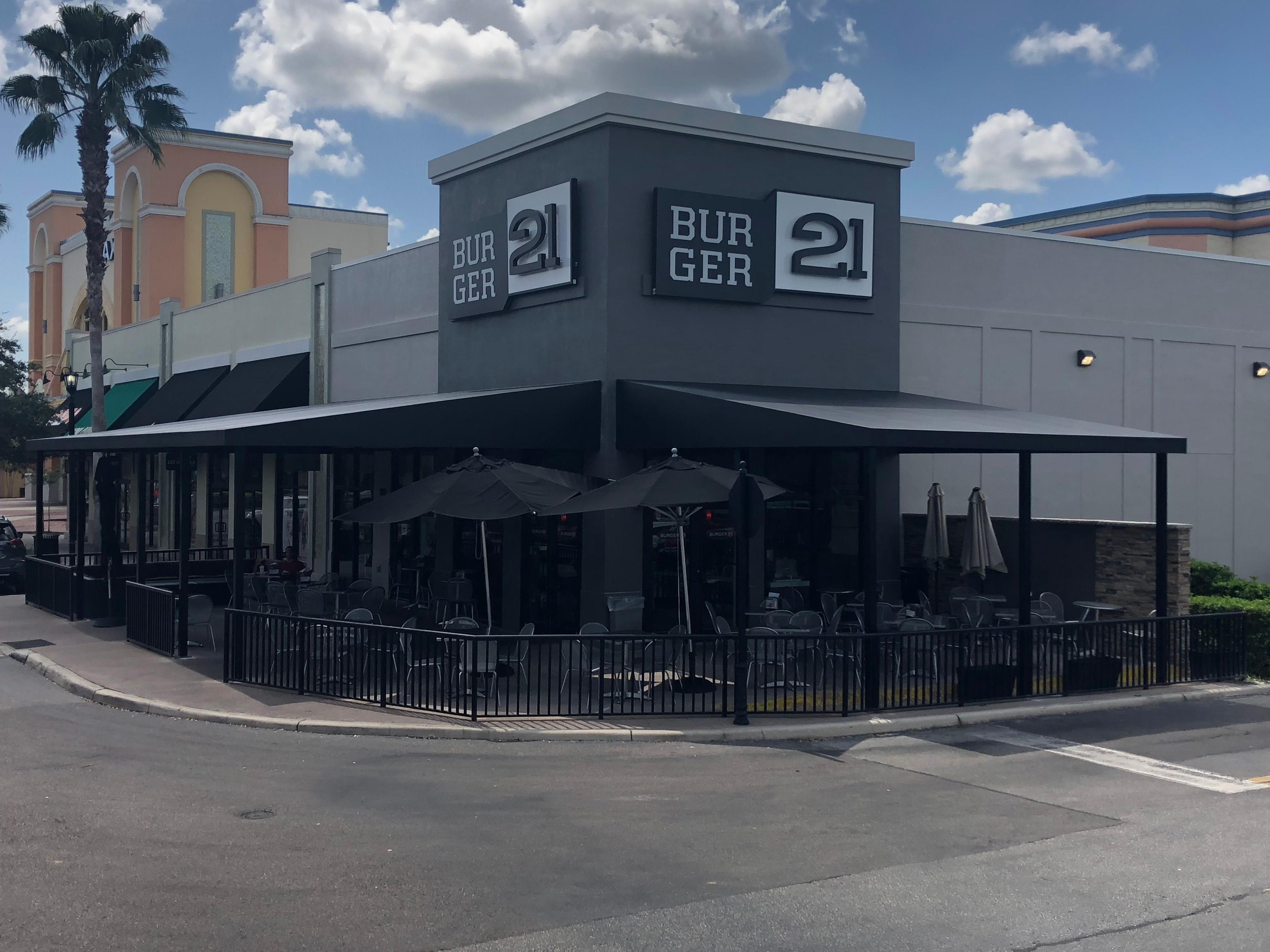
Metal Awnings in Fort Myers Beach, FL | Commercial & Residential Aluminum Canopies
12th Oct 2026
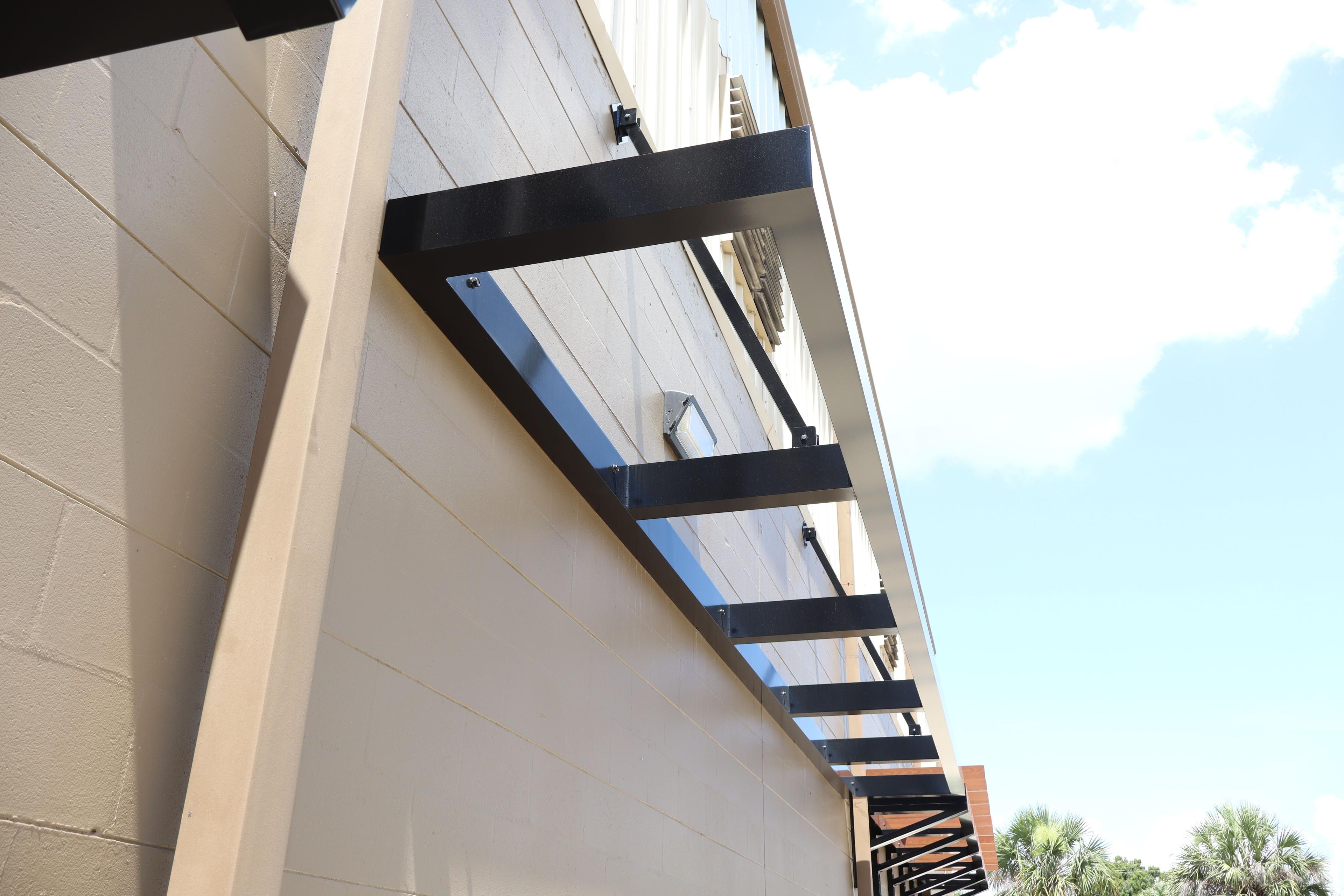
Metal Awnings for Condos, HOAs & Apartment Communities: Durable Shade That Lasts
29th Sep 2026
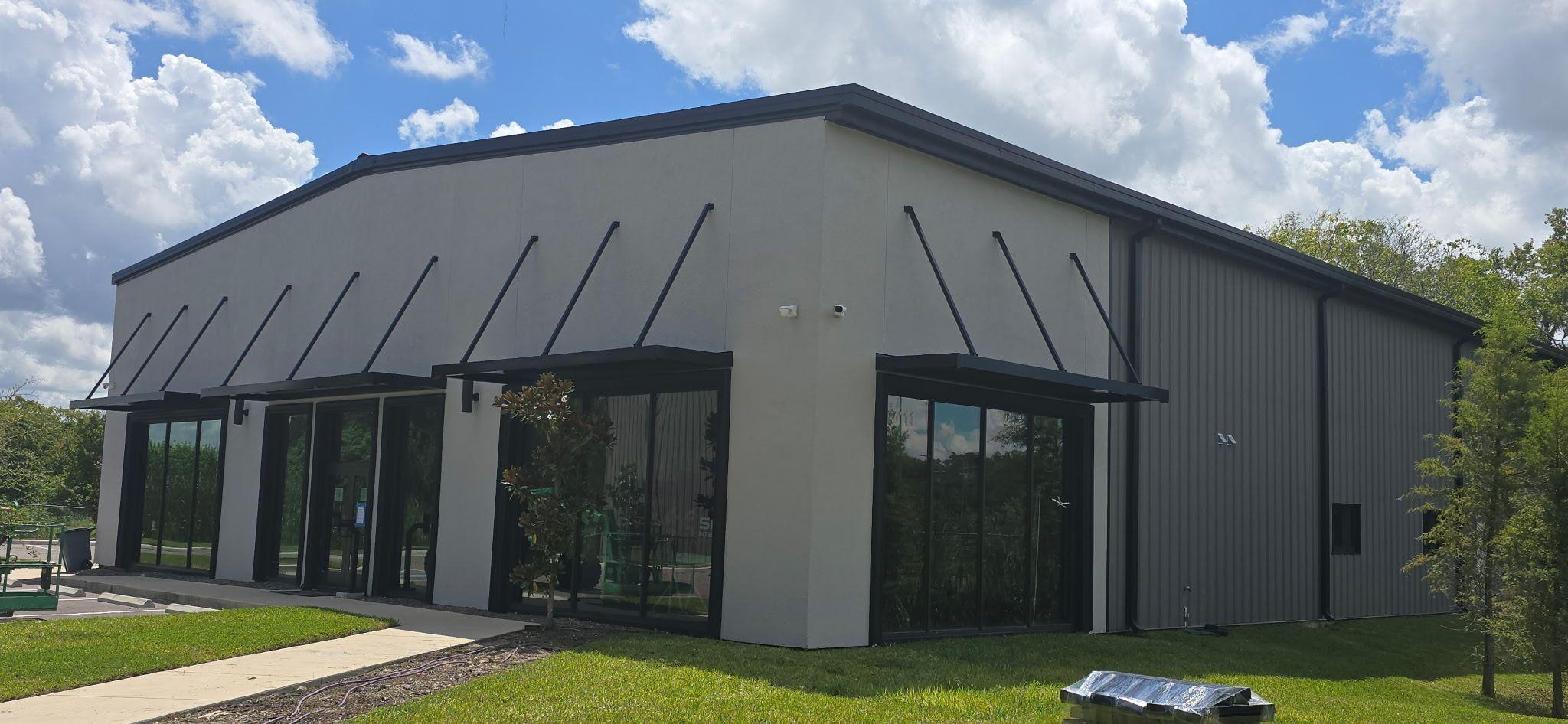
Metal Awnings for Medical & Dental Offices: Covered Entries Patients Notice
29th Sep 2026
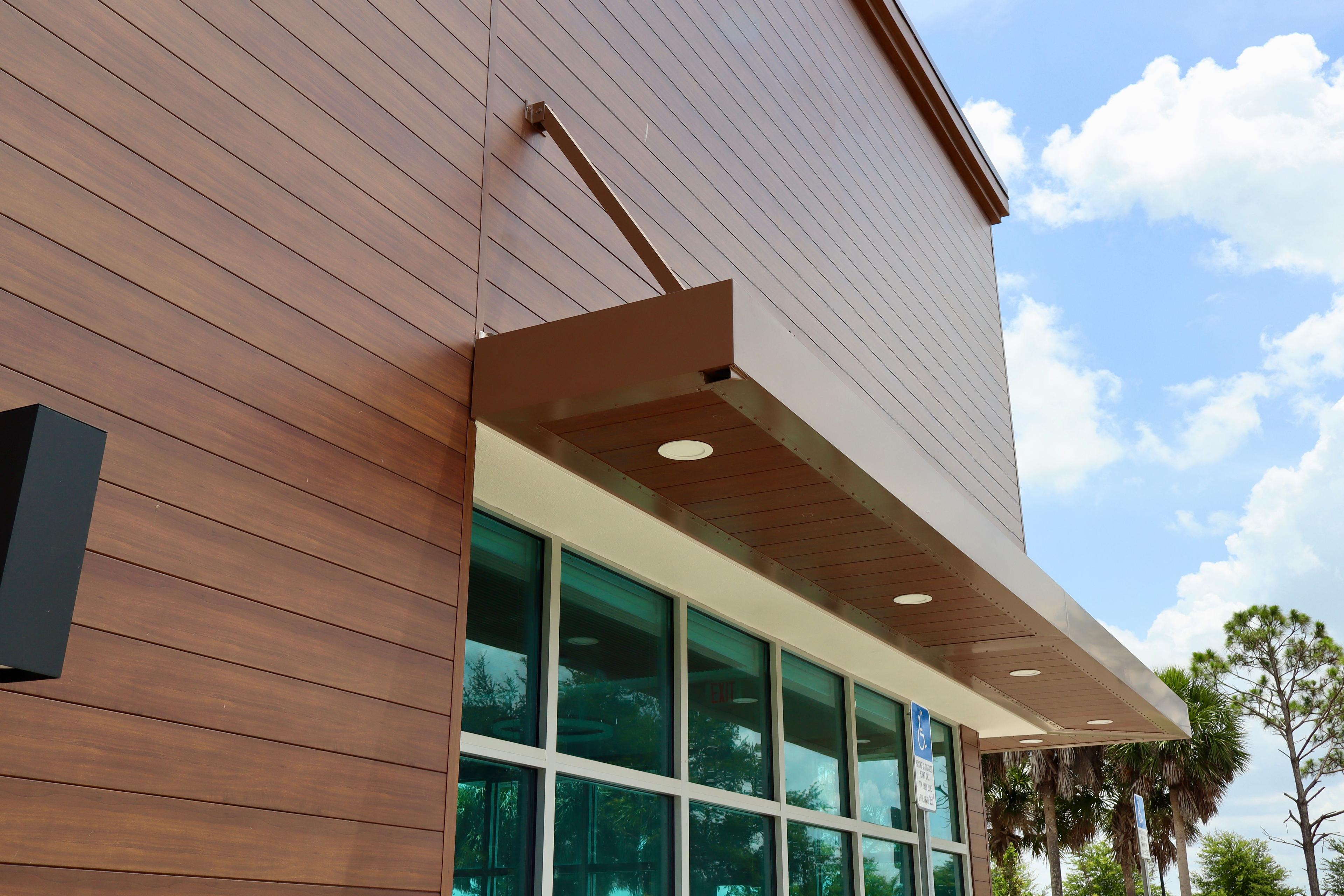
Metal Awnings in Poinciana, FL | Commercial & Residential Aluminum Canopies
21st Sep 2026
Metal Awnings in Palmer Ranch, FL | Commercial & Residential Aluminum Canopies
21st Sep 2026

Address: 4608 N Hale Ave, Tampa, FL 33614
Phone: 813-249-0059
Email: sales@metalawnings.com
Hours: 07:00 am – 03:30 pm


